Low-Dose Naltrexone: An Educational Overview for People with Hypermobile EDS (And Why It’s Not More Commonly Used)

If you have hypermobile Ehlers-Danlos syndrome (hEDS), you may recognize this: Pain often feels amplified, much bigger than any obvious injury or trigger. Everyday things like light touch, clothing seams or tags, certain fabrics (like wool), or even mild temperature changes can cause discomfort, burning, sharpness, or aching.
This isn’t imagined, and it’s not simply “anxiety” or “weakness.” A very frequent contributor in hEDS is small-fiber neuropathy (SFN) dysfunction in the small nerve fibers that transmit pain, temperature, and other sensory/autonomic signals in skin, joints, and tissues.
Research findings support this connection:
· Skin biopsy studies (measuring intraepidermal nerve fiber density) and specialized sensory testing often reveal abnormalities in a substantial portion of hEDS patients—commonly in the range of 60–80% of those tested.
· These are objective, measurable changes that help explain why stimuli feel overwhelming: The signals get amplified early in the pathway before reaching the brain.
Recognizing SFN as a real biological feature can be validating, it shifts the focus from doubt to understanding a neurological aspect of hEDS.
What Is Low-Dose Naltrexone (LDN), and How Might It Fit In?
Naltrexone is a medication long approved by the FDA at higher doses (50–100 mg) for opioid and alcohol dependence. At much lower doses (typically 0.5–4.5 mg/day, sometimes adjusted slightly higher), it is used off-label for its potential to modulate inflammation and immune signaling in the nervous system, possibly reducing glial cell activation and dampening overactive pain pathways.
In hEDS and related chronic pain contexts (including small-fiber issues), LDN is sometimes explored because it may help “turn down the volume” on neuropathic, amplified pain, allodynia (pain from non-painful touch), and overall sensitivity. Emerging reports, case series, and observational studies (including some focused on hEDS/HSD) suggest benefits for some individuals, such as reduced pain intensity, better tolerance of daily stimuli, less fatigue, or improved function. However:
· Responses may be variable: Some experience noticeable relief, others subtle improvements, and some little to no effect.
· Evidence is not from large randomized controlled trials specific to hEDS; it’s mostly from smaller studies, case reports, and real-world use in similar conditions (e.g., fibromyalgia, neuropathic pain).
· LDN is off-label for hEDS, chronic pain, or neuropathy, no FDA approval exists for these uses.
· In my clinical practice, I have prescribed this treatment to numerous patients with hypermobile EDS, and it has shown meaningful benefit in a significant percentage of cases.
It’s not a cure or a guaranteed solution, but for those with prominent neuropathic or sensitivity features, it represents one modest, generally low-risk option worth learning about.
Starting and Practical Details
LDN requires compounding pharmacies for these tiny doses (not commercially available). A common approach is “low and slow”:
• Begin at 0.5–1.5 mg (often at bedtime), increasing gradually over weeks to find an individualized effective dose (frequently around 4.5 mg, but it varies).
• This titration helps minimize initial side effects.
Common temporary side effects (often settling in 1–2 weeks):
• Vivid or strange dreams
• Changes in sleep (lighter or more restless)
• Mild nausea, headache, or stomach upset
• Feeling temporarily “wired,” anxious, or irritable
Long-term tolerance is usually good for those who continue.
Important safety consideration: Even at low doses, LDN blocks opioid receptors. It is not safe to combine with opioid medications (including tramadol), as it can reduce or reverse their effects, cause inadequate pain relief during flares/procedures, or precipitate withdrawal. Anyone on opioids should discuss this thoroughly with a provider, LDN may not be suitable until opioids are safely managed or tapered.
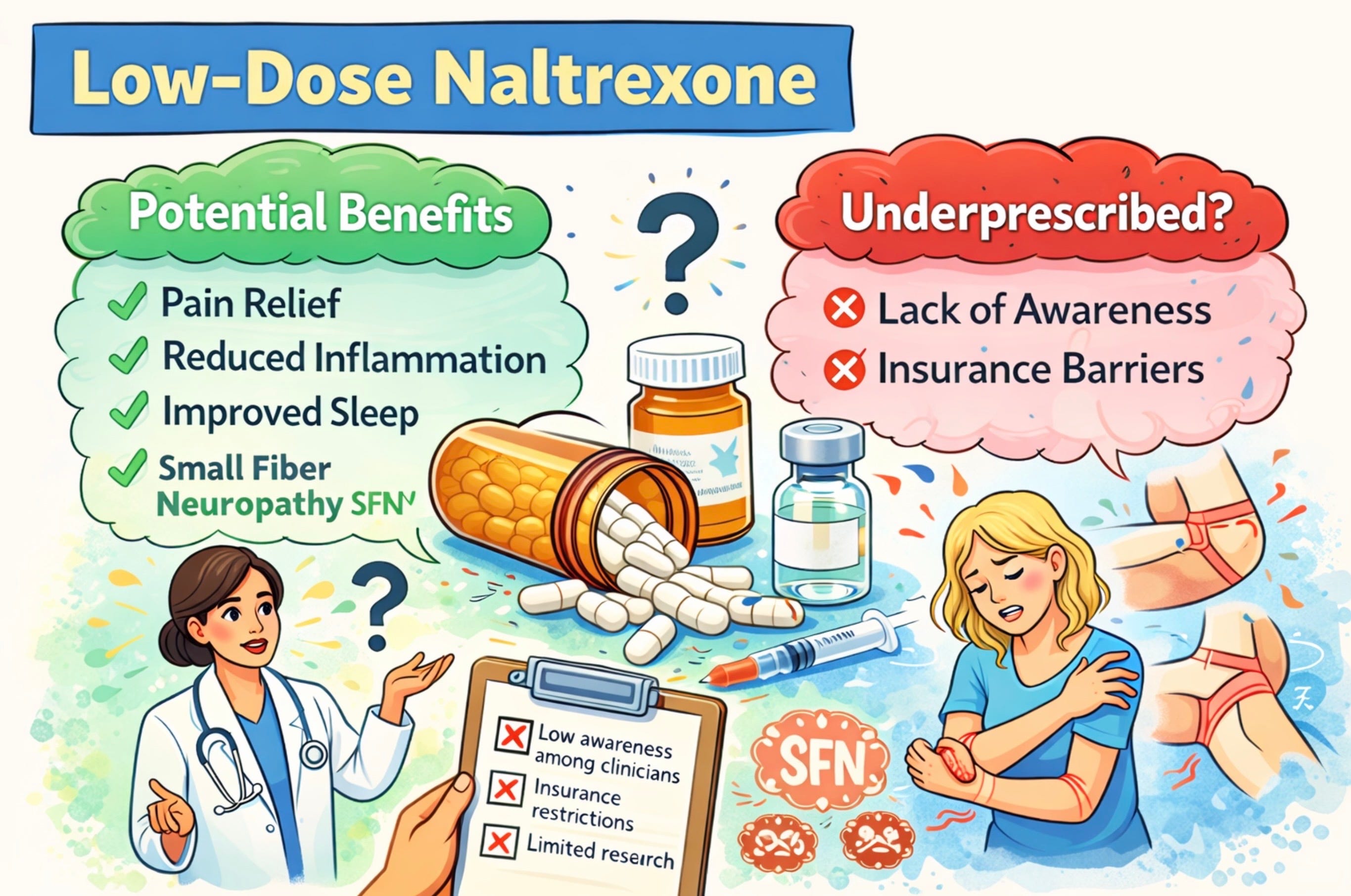
Why Isn’t LDN More Widely Used Among People with hEDS?
Despite frequent discussions in patient social communities, many with hEDS aren’t using LDN. Common barriers include:
1. Provider unfamiliarity - Most medical training covers naltrexone only for addiction treatment. Low-dose off-label use for connective tissue disorders or chronic pain isn’t standard curriculum, so many clinicians haven’t encountered it or feel uncomfortable prescribing it.
2. Off-label status - Without FDA approval or large hEDS-specific trials, concerns arise about evidence strength, liability, or documentation.
3. Opioid incompatibility – An issue for those who use opioids for severe flares, surgeries, or other pain management.
4. Logistical hurdles - Compounding means extra steps: potential costs (often out-of-pocket), insurance challenges, pharmacy delays, or supply variability, adding burden when your energy is already limited.
5. Medication sensitivity - Many with hEDS experience heightened or unpredictable reactions to meds. Fear of side effects (even short-lived) is understandable after prior difficult experiences.
6. Variable outcomes - It doesn’t help everyone, and pursuing another trial, especially one requiring self-advocacy, can feel draining when trust in healthcare is already strained.
If LDN isn’t part of your current plan (or if a trial didn’t work), that’s not a sign of missing something obvious or inadequate self-care. hEDS management involves navigating incomplete science and individualized needs in a system still evolving.
Wrapping Up
This is purely educational - not medical advice. LDN is one tool some find very helpful for dialing back amplified pain and sensitivity in hEDS, particularly when small-fiber features are prominent. If it sounds relevant to your symptoms, consider sharing this overview with your healthcare provider to discuss whether a supervised trial aligns with your history, current treatments, and goals.
Your experiences are real and valid. Keep advocating, stay informed, and know you’re part of a growing community pushing for better understanding of hEDS.
For more resources, check reputable sites like The Ehlers-Danlos Society or peer-reviewed summaries on LDN in chronic pain. Wishing you days with less noise from pain and more space for what matters.
Thank you for staying in the field! We miss you!!
LDN has been a valuable tool for my 20 year old with hEDS. She had tried it once before, but was prescribed a lower dose, I think 2 mg. She's now prescribed 7 mg and finds it helpful. She's still in pain but it's more manageable. Providers do need to validate the pain and intolerances of hEDS patients. And understand and treat it. Thanks for your education and advocacy. It's much appreciated in our community.